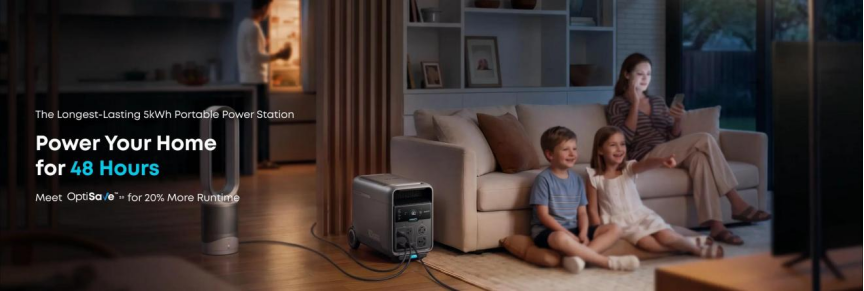
Anker SOLIX S2000 and Jackery 2000 v2 target the same buyer: someone who wants a portable power station around the 2kWh class for home backup, outdoor use, and emergency readiness. The key question is not just which one is larger, but which one delivers the better mix of usable power, charging speed, portability, and long-term value. Anker positions the SOLIX S2000 as a compact, durable backup unit with strong cycle life and fast AC input. Jackery answers with higher rated output, more port variety, and quick charging features. Both use LiFePO4 batteries, which improves safety and lifespan over older chemistries. To decide whether the Anker SOLIX S2000 is actually better, it helps to compare the details that matter most in everyday use.

Anker SOLIX S2000 vs. Jackery 2000 v2: Specifications Compared
Battery Capacity, Power Output, and Battery Technology
On core specs, these two units are close in battery size but different in power delivery. The Anker SOLIX S2000 offers 2,010Wh capacity, a 314Ah LiFePO4 battery, 1,500W rated output, and 3,000W peak output. Jackery 2000 v2 provides a slightly larger 2,042Wh LiFePO4 battery, plus stronger 2,200W rated AC output and 4,400W surge power. Battery lifespan is a major Anker advantage: it is rated to retain 80% capacity after 6,000 cycles and 60% after 10,000 cycles, while Jackery is rated for over 70% after 4,000 cycles. If long service life matters most, Anker leads. If running higher-wattage appliances matters more, Jackery has the stronger output profile overall.
Design, Portability, Dimensions, and Output Ports
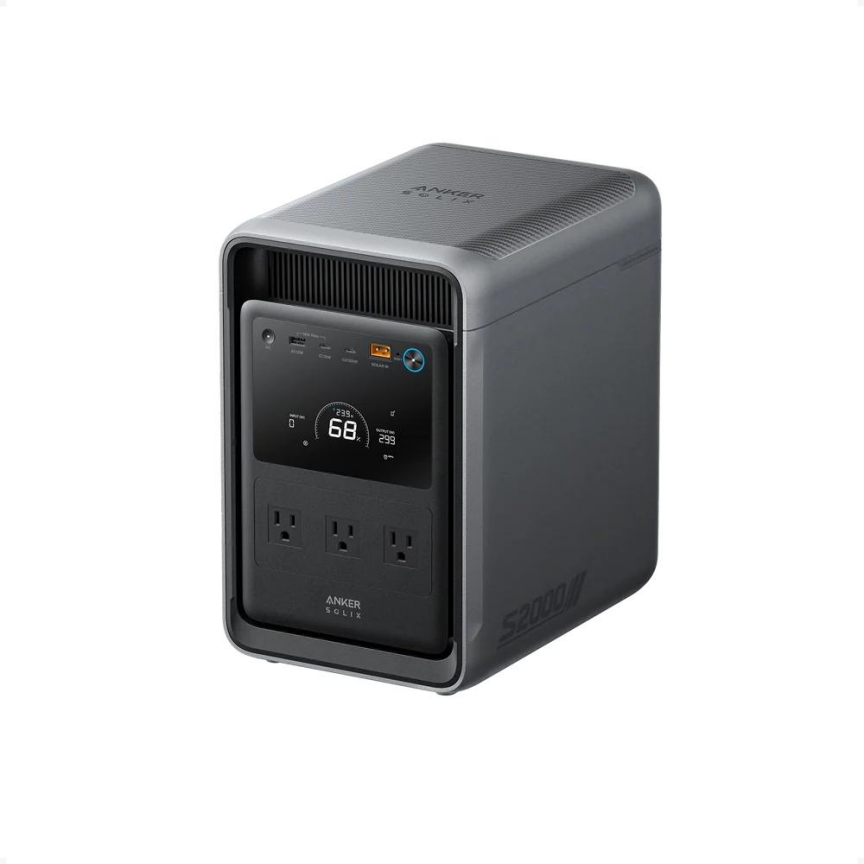
The Anker SOLIX S2000 stands out for its compact footprint. At 8.2 × 11.1 × 12.7 inches and 35.7 pounds, it is notably smaller and lighter than Jackery 2000 v2, which measures about 33.5 × 26.4 × 29.2 cm and weighs roughly 39.5 pounds. That makes the Anker easier to store in tight indoor spaces and simpler to move during outages. Port selection favors Jackery. It includes three AC outlets, two USB-C ports rated up to 100W and 30W, one USB-A port, and one 12V car port. The Anker model does not support a 12V DC output port. For compact carry, Anker wins; for output flexibility, Jackery offers more connection options.
Charging Speed and Real-World Performance Compared
AC Charging and Solar Charging Efficiency
Charging performance splits the decision. The Anker SOLIX S2000 supports up to 1,600W AC input, which is strong for a unit this size and useful when you need a rapid refill from a wall outlet. Jackery 2000 v2 is even faster in practice, reaching a full charge in about 1.7 hours and offering an app-based Emergency Supercharge mode that can take it from 0 to 80% in about 52 minutes. For solar input, Jackery supports up to 400W across a 16V to 60V range. Based on the supplied data, Jackery has the clearer advantage in documented fast-charging convenience, while Anker remains highly competitive for standard AC charging at home.
Appliance Compatibility and Backup Power Performance
For real-world backup use, the better choice depends on what you plan to run. The Anker SOLIX S2000 is positioned for emergency home backup and extended runtime on essentials such as refrigerators, lights, routers, and other must-have devices. Its 10ms UPS switching time is also faster than Jackery’s sub-20ms rating, which can matter for sensitive electronics. Jackery 2000 v2, however, handles a wider range of appliances because its 2,200W rated output is substantially higher. It also supports pass-through charging, quiet operation at 30 dB or less, and app control through Wi-Fi and Bluetooth. For higher-load flexibility, Jackery leads; for core backup responsiveness, Anker has a practical edge.
Which Portable Power Station Offers Better Overall Value?
Advantages and Key Differences of Both Models
The Anker SOLIX S2000 delivers value through durability, compact sizing, and home-backup practicality. Its long cycle-life rating, lighter weight, smaller body, 5-year warranty, and faster 10ms UPS switching make it attractive for buyers focused on reliability over many years. Jackery 2000 v2 brings value in a different way: higher rated and surge output, broader port selection, car charging support, smart app controls, pass-through charging, and extremely fast AC charging. The biggest difference is priorities. Anker is optimized for compact, long-term backup ownership, while Jackery is better equipped for users who want more power headroom and extra convenience features. Neither feels underpowered, but they solve the same need differently.
Best Use Cases, Long-Term Value, and Which One Is Worth Buying
The Anker SOLIX S2000 is worth buying if you want a compact backup station mainly for home emergencies, network gear, lighting, refrigeration support, and frequent use over many years. Its cycle-life advantage makes it the stronger long-term ownership play, especially for users who will charge and discharge the battery often. Jackery 2000 v2 is the better buy for people who need higher AC output for more demanding appliances, prefer wider port options, or want fast top-ups and app-based control. If the question is whether Anker SOLIX S2000 is better, the clearest answer is this: it is better for longevity, size, and backup readiness, while Jackery is better for raw power and charging convenience.
Conclusion
Anker SOLIX S2000 is not universally better than Jackery 2000 v2, but it is the better choice for a specific type of buyer. If you want a smaller, lighter power station with exceptional cycle life, quick UPS switching, and strong value as a dependable home backup unit, the Anker SOLIX S2000 stands out. If you need more output power, more ports, app controls, and some of the fastest charging in this class, Jackery 2000 v2 is the stronger pick. The battery capacities are close enough that they do not decide the comparison on their own. For long-term reliability and compact backup performance, Anker wins. For higher-load versatility and feature depth, Jackery takes the lead.